













Talks About Her Personality & Pressure That Comes With Being Ogun 1st Lady
+How She Met Her Prince Charming, Gov. Dapo Abiodun
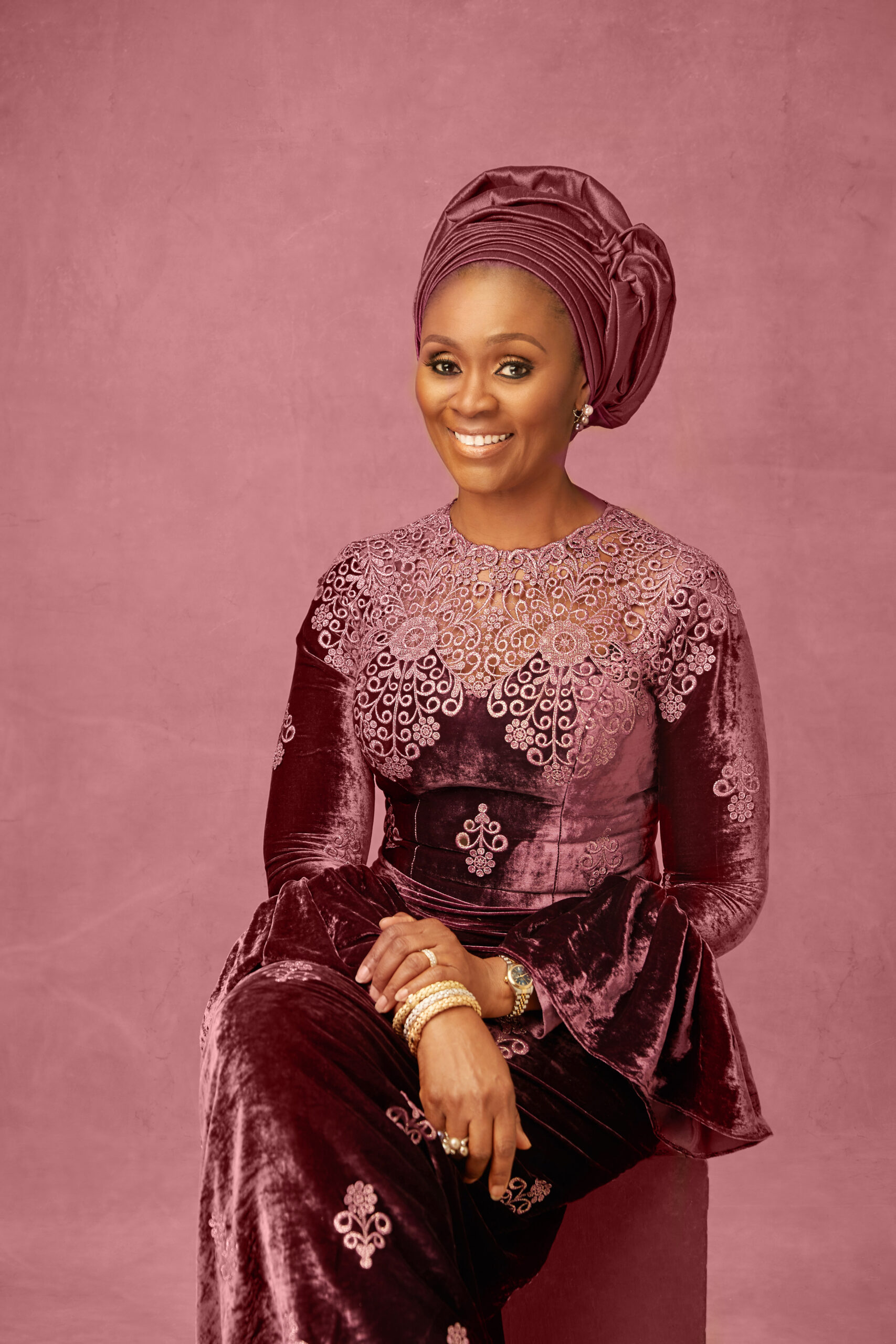
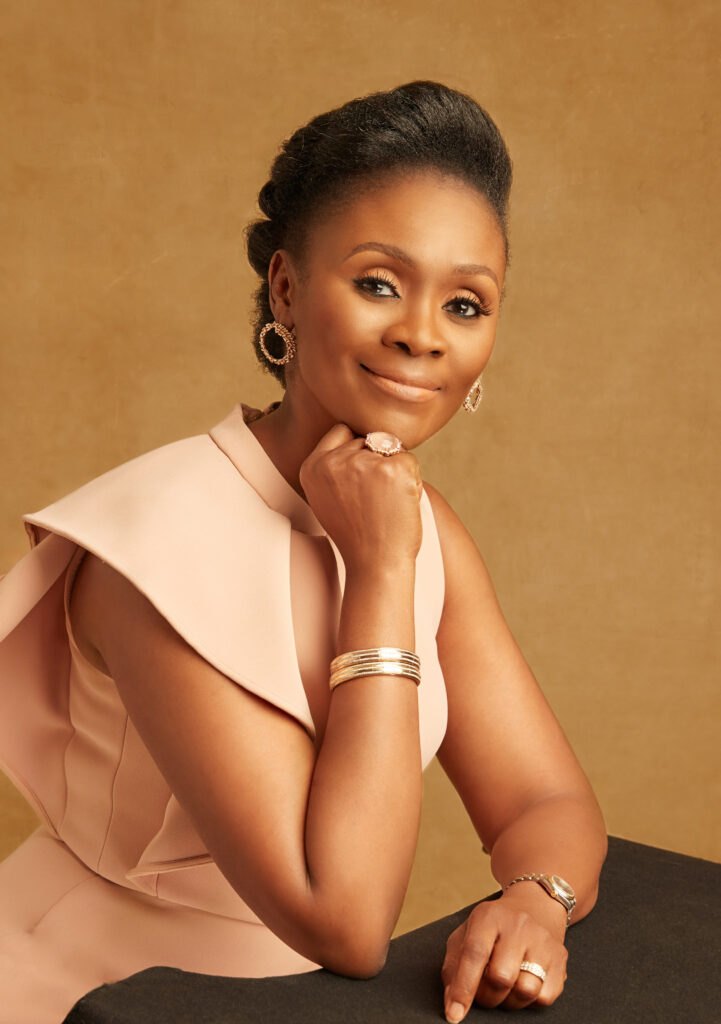
You simply cannot meet Her Excellency, the First Lady of Ogun state, Mrs. Bamidele Abiodun, for the first time and not be in awe of her personality. And it’s not just because she’s a gorgeous looking woman, one of the finest First Ladies we have at this time, it’s more about the substance that she oozes. For Mrs. Bamidele, the office of the First Lady of Ogun state is not a mere artificial space created by the state for her and her friends to frolick in splendour, flaunting the most priceless pieces of jewelry and fabric in the faces of the masses. The office of the First Lady, she insists, is a call to service and nothing more. And she has done such an outstanding job in that regard. Hundreds of women and children, resident in Ogun state, have benefitted immensely from her various Empowerment and skill Acquisition programmes. This is what she has spent the last five years plus doing in office as Ogun First Lady and she is yet to run out of steam. She desires to do a whole lot more. This is what the office of the First Lady means to her, every other thing is inconsequential.
This perhaps explains why it took this elegant but extremely down-to-earth wife of the very hardworking governor of Ogun state, Prince Dfapo Abiodun, a while to agree to do this interview with TIMELESS magazine. For starters, she rarely grants interviews. She does not like undue attention. She is fiercely focused on her job and she prefers for her contributions to the state and humanity speak for her. Those who know Mrs. Abiodun very closely will tell you she is not one given to frivolities. Her Excellency is not loud. She is simple, yet she has such a very strong, compelling personality that immediately tells you she’s nobody’s fool. When she needs to put her foot down and speak her mind, she would do so politely, quietly, giving very little hoot whose ox is gored.
As a First Lady, she detests praise singers around her. You would only need to spend a few minutes talking with her to notice she is a very private person. If she had her way, she would prefer to be left alone in her small space to do her things privately and support as many women as she possibly can without making so much publicity of it. This is one of the reasons why many Ogun indigenes, men and women alike, love their adorable First Lady, the undeniably beautiful and compassionate Bamidele Abiodun.
When the TIMELESS crew arrived the Abiodun residence in Lagos to speak with Her Excellency, we were way behind schedule. We feared there was a strong possibility the First Lady would be so upset we had kept her waiting she could promptly cancel the interview. But surprisingly, she didn’t. Instead, she was patient with us. We met an affable First Lady with a charming personality who immediately showed us why she’s widely regarded as an unusual and a different kind of First Lady hugely loved by her people. She carries herself with no chips on her shoulders. We were speechless when she reminded us that, in another two years or so from now, she and her husband will no longer be in office, and she will return to being simply Mrs. Bamidele Abiodun, and so she was already preparing to make that transition as seamless as possible for herself. She also spoke candidly about how difficult it was for her to settle in as First Lady in the early days following her assumption of office. She talked about how fulfilling it’s been for her to make the modest contributions she’s made towards supporting Ogun women and children and then, the icing on the cake, Her Excellency was gracious enough to share a bit of her love story with Governor Abiodun with us. We spent well over an hour drilling this very beautiful, articulate and enigmatic woman. It is a collector’s item, enjoy the interview.
—-INTERVIEW BY: ADEWALE ADEGOKE
Thank you so much for the rare privilege to speak with you, your Excellency, so, let’s dive straight into it. Before you became the First Lady of Ogun state almost six years ago, you were not that visible in the public glare. Of course, His Excellency, the Governor, your husband, was already well known within the political circle. How did you take it when he told you about his intention to run for governorship, considering you have been a private person all of your life and knowing that you were no longer going to have a private life once you got elected?
First, I want to say thank you very much for the honour. When my husband decided to contest this time around, knowing, of course, that he had been interested in that office for about 15 to 20 years before that time, he had tried to run a few times, I was not so surprised. So, this last time, it came with a mixture of pride and concern. I was proud of his vision and commitment to serve. I was also mindful of the demands and the scrutiny that politics brings. I knew it would require personal sacrifices, especially in terms of privacy and adapting to public life. And to prepare, I leaned on faith, sought counsel from trusted friends and family and focused on equipping myself with knowledge and strategies to support him actively. It was a steep learning curve. It has been a steep learning curve. But my commitment to his vision for Ogun state gave me the strength to adapt. You know, like I said, having shown interest a few times in running for office, I knew it was an uphill task. And over time, I had experienced the intrigues and the complexities of campaign. But like I said, it was what he wanted, and we all decided to give it the best shot. Also, on a more personal note, we had just experienced grief in the family, maybe like a year and a half before that. And it was a very welcome distraction, because everybody was dealing with it in their own ways. For me, I threw myself right into it, because it just took me away from the constant thinking and grieving. I mean, it’s still there, but at least it engaged me and kept me occupied. So it was good. That was one of the reasons why I found it a bit more acceptable. Otherwise, I’m not sure that my personality had any interest in it.
So, you’ve spent almost six years in office, how has that whole journey been for you? How has it been getting right into the mix of politics and coming face-to-face with all its intrigues and pressure? And for someone who before then had nothing to do with politics, it must’ve taken a whole lot from you settling in….can you take us through that phase?
Well, first, let me remind you, when we started the campaign, we were all campaigning to get the desired result, which was to win. But it was a very, very stiff opposition that we faced at the time and nobody really knew how it was going to end. So I don’t think that I was prepared for the end until it happened. And even after it happened, it was like, I just realized, ‘ah, I’m in it now.’ Now I need to find out, how am I going to cope with this? We were more concerned at the time about getting elected into office. It was an uphill task. It was a lot. I wasn’t prepared at all. But I like to relate to people. So I’ll say that I can be a relatable person. Any kind of person you are, I’m always interested in people, who they are, where they’re coming from, where they want to go and how I can be a part of it. So I guess when it first started, when we first got into office, I first had to deal with many things I didn’t know about. And we didn’t have the privilege of some things… You know, sometimes your predecessor would put you through and tell you, okay, this is how you do this. But we didn’t have that privilege at the time. So it was just like I was plunged right into it. I had to find my feet and I must say some of the civil servants helped. I had a director at the time, she was of immense help because I didn’t know anything. But I’m always open to learning. I never acted like I knew everything or because I’m the boss so I’m going to lord things over them. For me, it was a matter of, ‘Miss Olaniyan, what do you think we should do? How should we do this? And how did they do it the last time?’ So I was open to advice and it sort of helped me to find my feet quickly and establish myself in the office, so that’s how it started.
You’re someone who I know must have had a very, very sheltered childhood, someone who wasn’t exposed to dealing with all manner of people and that’s the exact opposite of politics. It compels you to deal with everyone. From the grassroots to the elite, the reasonable to sometimes uncouth individuals who feel entitled and yet you have to be polite to them all the time. How have you been able to process all of these and deal with it?
First, I’ll tell you that I’m not polite all the time because sometimes the sense of entitlement that some people have can be extremely annoying. And I wasn’t trained for this. Like you said, maybe I had a sheltered upbringing. Not really sheltered, but I wasn’t that exposed to all kinds of people. I mean, I grew up in the same environment. I went to primary school, secondary school, university in the same environment. I attended University of Ibadan. And I didn’t go to boarding house. So I didn’t have the privilege of learning to live with other people. So relating with other people wasn’t something that I had come to know by virtue of how I grew up, but I had to learn. I had to learn the hard way. Initially, when we first got in, I would say things as I saw them. I would say, why are they behaving like this? What is wrong with them? Why is this woman acting this way? There was one particular woman I remember during the campaign. She was a very aggressive woman. And she said something to somebody about me. She said that somebody had given me something to give them and I didn’t give them and she’s an older woman. So, I called her on the phone because I was so angry and I told her off. I said she should never say such things about me ever again, she should just leave me alone. I am not the governor. I am not the one that is running for office. If you want anything, go to your governor. If they give me anything for you, I will give it to you. But I reacted based on how I felt because I was just annoyed.
But then, over time, I got to realize that you don’t relate to people like that. You don’t come out blunt like that to people. Try and be more tactful. Try and find a way to let her understand, even though they don’t understand because they believe what they want to believe. They have this sense of entitlement and they look at you and they think, uh-uh, you have everything. You have the answer to all their problems. So, relating to all manner of people, over time, I’ve had to learn. I’ve had to learn to relate to some people in the civil service as well. Some of them are very nice. I’ve met one or two that have been extremely hostile. But I’ve learned to not make all these encounters personal encounters. It’s just part of the experience. People would display who they are. So, it’s up to me to learn how I react to how they act. So, I made up my mind that I’m not going to lose my cool. Even if I’m ruffled, I’m not going to let them know how I feel. So, I try and smile all the time.
I try to be as accommodating as I possibly can all the time. I hear comments that they pass, I just ignore. I just act like nothing happened. Someone has been nasty to me, I see them and I’m warm to them. And that even helps me. It takes a lot of burden off me. So, it’s not a case of where I now see someone who has offended me and I’ll be feeling uncomfortable or angry. I mean, I’ve left… That ship has sailed because I’ve left you and I’m like, I’ve left you with your problems because I have found that in relating to people, people will always be who they are. It’s how you react to them that makes you what you are. You can’t teach an old dog new tricks and then you cannot make an adult become what you want them to be. They are who they are. So, you have to find a way to relate to them and then, you have to have your peace, otherwise, you’ll be constantly in turmoil. This person did this to me, this person looked at me somehow, this person said this to me, I called this person, they didn’t answer me. You know, I’ve made up my mind that I will not be disturbed by all these people that I have just met, because I’ve just met most of them. I mean, they may add value to me now, but it’s just for now. Once the office is over, I may not even have a relationship with many of them. So, why should I make it an issue? It’s the people that I knew before that are my people, they can bother me if they behaved in a certain way.
What would you say have been your strongest impressions of the people of Ogun State, especially the women? In almost six years of interfacing directly with them as their first lady, how would you describe your people generally, especially the women?
Well, Ogun State people are remarkable. We’re first in many things. I’m sure you know, first in many things. We have the highest number of higher institutions. We’re educated. We’re modern. We’re forward-thinking. We’re hard-working. We’re full of potential. And the women are extremely resilient. I found that, in dealing with a lot of women, many of them are the breadwinners in their families and they carry it with dignity. They’re ready to go out and do what they need to do to sustain their families, to uplift their children. Education is very important to a lot of Ogun women. And the women in particular, they’ve inspired me greatly with their strength and their determination to provide for their families and their communities as a whole, despite all the challenges. For me, it’s been an honor to empower them through our various programs, because we do various programs to support them even though it’s a little like scratching the surface. We have offered skill acquisition, health interventions, financial inclusion, training them towards financial independence and the importance of it.
We also intervene in gender-based violence cases. I mean, there’s now a lot of talk on gender-based violence. Before now, I think it was 2020 that the governors declared a state of emergency on gender-based violence and since then, there’s been more talk on gender-based violence and we’re teaching the girls, teaching the boys, how the boys should respect the girls, how girls should run away from situations where they find themselves being harassed or abused. We teach them how girls can speak up, because that’s another problem, many people don’t know that they can speak up where they can find help because more often than not, the perpetrator is within the family or around that same environment. So, now we let them know that there are consequences for these actions. Just pull yourself away, find someone because sometimes you can’t tell your parents, you can’t tell people around you. They won’t believe you or they’ll think that you are the one that asked for it. There are phone numbers you can call now, there are places you can go to where you can find shelter, you can find succour. The courage and the ability of women to get what they want is second to none. Culturally, again, Ogun state people are pace-setters. For decades, we have demonstrated how to be proud of our culture, and our heritage.
Our people are vibrant, they are sophisticated. Our women, no matter how uneducated they are, they try to be sophisticated. For instance, this Ojude Oba that we do in Ijebu-Ode every year, I mean, look at how it takes them one year to prepare for it, and they go to great lengths to prepare for it and they come out looking extremely beautiful and not all of them are educated. Not all of them are enlightened. They may not be educated, but they’re open to learning, do you understand? And they’re sophisticated. Some of them may not be educated, but highly sophisticated they are and our women are like that. Ogun state women, it must be said, are very hard-working.
I just thought to ask you this being a mother yourself, how worried are you these days when you hear about a lot of our young ladies being killed and slaughtered for money rituals and the sort? And the flip side of it is that a lot of them also make themselves open to these various forms of danger, in the sense that they get into all kinds of vices like hookups, and the rest. How worried are you about this dangerous trend?
Well, to begin with, I wouldn’t blame it 100% on them. It’s the state of the economy that has made a lot of people very vulnerable. Everybody wants to get a better life, that’s one. Not a good excuse, but one. Secondly, social media is not helping. Social media has its virtues, but it also has its vices. What we put out there, what a lot of us women put out there, flashy body, flashy clothing, flashy lifestyle, things that are not necessarily real and ideal, these are what the younger ladies see and they want to emulate. And many people want to get rich quickly and they have all sorts of stories, and people lie. People make things up. Many of these girls are vulnerable already. They’re vulnerable already because maybe they don’t have proper parental counsel and advice and care. Maybe they don’t have adults around them. So they’re open to these things, and they see these things, and they think it’s possible. So they think if it’s possible for this person, it should be possible for me and so they get lured into the wrong hands.
We have so many cases of girls who were told that they’ll have a better life if they go and work abroad, and they take them, and they use them as sex workers. They use them as domestic workers. They maltreat them. They have no rights because they’re living abroad illegally. Many of them are enticed by these things. They tell you, ah, they’ll pay you $250 a month. If you change that to Naira, you know how much that is, you can send it back home. And they see their parents suffering. Of course they’re going to want to do something. So, some of them are not even cut out for things like that, but they think that’s the only means because the economy is not such that it’s easy to find something to do that will give you sustainability. It’s just unfortunate. What we need is more advocacies, more noise about all the dangers that lie in these things that lure the girls into all these nefarious activities that can cost them their lives.
Last year, we had a program. I think it was the International Day of the Girl Child. We had to invite one young lady who is bold as far as I’m concerned. She was taken to Libya to work in Libya and she went through the Sahara. She was raped. She was gang-raped. I mean, she suffered when she got to Libya. They locked her up. She had to work and pay people who didn’t even help to facilitate her getting to that place. We had to bring her to come and speak to the young girls. And you know, these young girls have a lot of questions to ask. So, we asked them, if you’re not able to ask a question in front of the cameras and your parents and your teachers, write the question down and hand them to us. You’d be amazed at the kinds of questions that children have to ask.
You know, our culture, when we were growing up, the kind of relationship that our own children have with us is not the kind of relationship we had with our parents. There are certain things we couldn’t talk to them about. It was taboo. We couldn’t talk to them about certain things. But now, because we’re more modern, and we know the results of parenting in a different way, it is better than the way our parents brought us up. We’re able to communicate with our children better. So, our children open up to us better than we did with our parents. Our parents didn’t know half of the things we got up to when we were growing up. In school, when I was in university, they didn’t know where I went. I’m supposed to be in University of Ibadan, I’ll be in Ife, or I’ll be in Lagos. They didn’t know. But with our kids these days, a lot of us have made it essential and important that we know when they move from point A to point B because we’ve established the kind of relationship where they can trust us enough to tell us when they’re doing good and when they’re doing bad, do you understand? So, it’s a lot. The work starts from the home. But it’s not every child that has that opportunity. A lot of women are distressed already with bad marriages, they’re economically battered. So, they can’t make decisions for themselves or they can’t help their children. Their children are also vulnerable, so it’s a ripple effect. It’s a chain reaction.
So, we can help through advocacy, by talking about it, by bringing up people who have had such experiences. Let them know that, look, this thing is not going to help you. Focus on your studies, do your handwork well. Whatever it is that you can do, do it well. Don’t let anybody come and deceive you and lie to you about the attractions of life outside of Nigeria where you find that you suffer. That girl came back with horror stories but she was brave enough to talk about it openly. She’s writing a book and I’m sure that her book will be published very soon. We need a lot of people like that. Our girls have to see that the grass is not always greener on the other side of the fence.
Listening to you in the last few minutes, one can tell you speak so passionately about the people of Ogun State, especially the women. I’d like to know, what would you say has been that one thing that brings you great joy in being the First Lady of Ogun State? What would you say has been your biggest fulfillment yet in occupying that office?
Without a doubt, the ability to positively impact the lives of people gives me the most joy. Seeing women and children thrive through initiatives that we have implemented. Whether it’s the mother who starts her business, maybe after receiving a small grant, you’d be amazed that for someone in the market, 20,000 naira can make a difference in their lives. How? They don’t have any money, they don’t have any capital, but they go to the market. They collect from somebody who has the resources to buy a lot then they go and sell. They now give the person back their money. If you now give that person a little bit of capital, they now start to build their own. We find that our women are very responsible when it comes to borrowing money. Most of our women, they always pay back. There was one time we did a program with FCMB called She Ventures, and they gave some of our women loans, interest-free loans, and maybe 98% of them paid back. The ones that didn’t pay back were for reasons that were beyond their control. Our women understand how to run businesses. They understand that they are women of integrity. They borrow money and they pay back. We put them in clusters so that they can borrow money and when they borrow money they pay back. It helps them to progress. These are the kinds of things that make me extremely happy, especially also being able to do something for someone that cannot do anything back for you in return, that is the one that gives me the most pleasure. The person doesn’t even have to know me, but knowing that I’ve done it for that person, I’ve seen the difference that it has made in the life of that person, and then the person doesn’t have to come and be doing, ‘ah, yes, ma, thank you, ma’. That is what I like. That is what gives me the most joy.
You have spent almost 6 years in office without any form of controversy trailing you or your office. We haven’t read anywhere where people have come out to say, oh, she’s too full of herself, she has problems relating with people. None of this has happened and I know it couldn’t have been easy for you to achieve this when dealing with different kinds of people. Would you say some part of your childhood, in some way, prepared you for the office? Was there any part of your childhood that, if you look back, you can say shaped you in one way or another and prepared you for this office?
Well, definitely I give credit to my upbringing in terms of how I relate to people and handle things now, because I grew up in a, well, not sheltered, but in a small community, and I’m deeply grateful to my parents for the values they instilled in me and the environment in which I grew up, you know, humility, discipline, self-confidence, and a strong sense of service. It was pretty much a modest upbringing. It wasn’t lavish in any way. So the values that we had then were not based on money, they’re not like the values that people have now. These days, everything’s all about money, what you have, who you are. Education was essential, it was imperative, but how you relate to other people was very, very, important. I didn’t, and I still don’t know how to look down on other people because I am more privileged than they are. I’m not able to relate to people like that because that’s how we were brought up. These have been my guiding principles in navigating the pressures of public office because, you know, in public office, sometimes I realize how some people really get carried away and how it gets to their head because you get people coming and everybody is shaking, running up and down.
But for me, I’ve never been given to flattery, even when I was very young. When people are overly nice, I’m a bit cautious than accepting of it. And I’m like, why are you flattering me, what for? Say it as it is, don’t patronise me. So, like I said, these have been my guiding principles in navigating the pressures of public office. They’ve taught me to stay grounded and very, very focused even in the face of challenges. I’ve also learnt to prioritise and remind myself that, while I can’t meet every expectation, I can strive to make a meaningful difference in the areas that I can control. And you know, my parents always taught us to treat everyone with dignity and respect, no matter who they are and for me, everything is time and chance. No matter who you are, you cannot remain in office forever. So, I am already preparing myself for a smooth transition from public office back to my private life like nothing happened. I remind myself that you’re just Bamidele o, after you leave office, these people hailing you and shouting ‘your Excellency’ will pass by you and will not even greet you, so, I’m ready for that. I’m not flattered by it at all.
Each time I see you at events, watch how you conduct yourself, listen to you speak, the impressions I have of you are that you must’ve been a fiercely focused, prim and proper lady right from your youth. But I’d like you to tell us, what kind of young lady were you, ma, were you like any other average young girl out there while growing up?
I would say that I was like any other young lady out there. I had the same kind of aspirations that most girls have. I grew up like a normal person, rode my bicycle when it was time to ride my bicycle, cooked when I needed to cook, went to parties when I needed to go to parties and had boyfriend when I needed to have boyfriend. But I had boundaries and my mother, she was particularly forthright. She passed away 17 years ago. I never saw her lie. She was one that always spoke her mind. With her, what you saw was what you got. So, I think watching her as a child has had an influence on all of us. Her way of life was like a guide to all of us. I got into trouble like any other child, but in all, I remained a child that my parents will always be proud of.
These are difficult times for Nigerian women, for everyone, owing to the economic reforms and I know that, being the first lady of Ogun state, this also puts some enormous pressure on you because what this translates to is that lots of people come to you seeking all sorts of assistance. Just take us through a few of the things you have done to support women through these difficult times in your own small corner.
No doubt, the economic realities have indeed placed a significant burden on families, especially women who often bear the responsibility of managing household needs. In response, we have focused on initiatives that provide immediate relief and long term empowerment such as micro credit schemes for women entrepreneurs, skill acquisition programmes and free health care for vulnerable children and mothers. While these measures are not a complete solution, they provide a safety net and a foundation for resilience as we await positive impact of the reforms. And we’ve done quite a lot in the area of food security and empowerment of our people financially. The Ogun state government, as you know, provided transportation, adopted the new minimum wage and is empowering our farmers. At Ajose Foundation, where I am founder, we have also given cash grants and food items to families in various communities in the state. One of the biggest things that we are doing at the moment is partnering with the office of the First Lady of the Federation, Her Excellency, Senator Oluremi Tinubu. She has done a lot. She’s been in office less than two years and what she has done, through us, is amazing. The Renewed Hope Initiative is what their programme is called and all the first ladies are her Renewed Hope Initiative Ambassadors in all the 36 states. Her contributions are invaluable. She gives us cash grants to give to people, cash grants for the elderly. We did one in December where we had about 500 elderly people from across the state and we gave them N200,000 each with food and stuff, I’m talking real elderly people above the age of 65.
She gave us some money to give to people living with disabilities, because that’s another area where people neglect a lot. We gave like, I think it was about 200 of them, 100,000 naira, just cash grants, just to help them and make them feel better. She’s also supporting farmers. There was a point she gave us some money, we gave 500,000 naira to about 20 or 40 female farmers to help them scale up what they were doing. One time she gave each of us one trailer of rice of 25 kg bags. We had like 1,200 of those 25 kg bags of rice to distribute to people in need. She gives us scholarships for people in tertiary institutions. I mean, anything that comes to her, she just gives. And we always have to report back to her to let her know this is what we’ve done. We include the phone numbers, BVNs, account numbers of the recipients and everything, so that if she wants to check at any point in time, she can check. So there’s accountability. Right now, because of what she’s doing and because a lot of people are seeing what she’s doing, people are going to her and they’re offering her support and she’s now filtering that support through us, through the grassroots. So we are doing what we can and then we’re also working through the wives of the local government chairmen and women leaders.
Sometimes we even put aside the politicians, because you know, politics is always politics. Politicians will always lean towards their own people and people that they know. And she always tells us, I’m not the first lady of APC, I’m the first lady of the federation, so it is not for APC alone and so, we have that in mind. When we too are doing our distribution, factoring PDP, factoring Labour Party, we’re factoring people generally and that is something that she’s driving and she’s driving it very well. Then she’s keeping us engaged. We’re not first ladies that are sitting down at home and doing nothing, just taking pictures or looking nice, no, we’re out there and we’re engaging people. We’re engaging people at the grassroots level.
 I’m sure that you don’t know about all these things, because she doesn’t really publicize them. She doesn’t even talk about them. I know she’s doing a lot, but she doesn’t talk about them. As far as I’m concerned, she should talk about them more. She should talk about them so people can see what… I mean, don’t let me say some things, but she’s just awesome. And she’s helping us to become responsible because she’s a very compassionate woman. There was one time, I think she was going through the newspapers and she saw the story of a girl that put something on Facebook. The girl is a sickle cell patient. One of her limbs had been amputated. Her mother or her parents had spent a lot of money looking after her. They didn’t have anything and she just put it out there on Facebook. And the First Lady said, go and look for that girl. There were actually two of them. Go and look for that girl for me. She didn’t even want the girl to know that she’s the one that did stuff for her. She gave us the responsibility of going to search her out and making sure that the girl was fine. And then she just followed up. She wouldn’t just do it and leave it, she would ask, that girl, how is she doing? Are things better with her family? She’s a very good example. She’s doing a lot for us First Ladies, enabling to support a lot of people in the grassroots and it’s making us now more responsible towards the people at the grassroots level.
How do you feel as a woman who also occupies a very exalted office in Ogun State when you hear people make very nasty comments about you, or about someone like Her Excellency the First Lady, Senator Remi Tinubu, knowing how much you’re both giving back to make life easier for the people out there?
Well, I’m not really out there like that so I don’t get a lot of that. But I get a lot of that from people that know me. I mean, since my husband became the Governor, I get a lot of that from people who think, ‘oh, I should be doing this for them and doing that for them.’ I mean, I’ve always been who I am. I’ve always paid attention to my appearance. I don’t look any different now than I looked then. So when people come and they say all sorts of things, ‘Ah, look at her, she’s carrying that bag, she just bought this one.’ I mean, initially, it used to bother me and I used to try to prove that they’re wrong, But now, I don’t bother anymore because I think most people talk out of lack of knowledge and sometimes a sense of entitlement. And maybe they think that, because you’re in the office of the First Lady, there’s cash growing on the trees around you, and so because of that, you should be able to hand it down. And they don’t even know that different governors have different ways in which they run their homes. Some women have access to plenty of money that you can see. Some don’t. But it depends on how you carry yourself. Nobody really needs to know how it is.
People who work for me, when I’m talking to them, I don’t talk to them as if I’m the boss, we’re a team and everybody has their own contribution, including my truck driver that’s driving my truck. I’ll call him and I’ll ask him what the situation is at his end. I mean, I have a business that I run, and I still run it, and I still call my driver, and I’m not going to say because I’m first lady now, someone else will have to reach him on my behalf, no. I still ask him, so I make him feel a part of the business, not that I’ll be lording things over him, and I’ll be saying, no, I’m your boss, and so whatever I say, you must do. So because of that, because of the way I relate to my staff, my staff work wholeheartedly. I don’t have problems with them. I’m not unapproachable, they can talk to me anytime, they can ask me anything. We have an understanding, so my staff turn over is like zero, except I take on new people. My staff don’t leave me, because the business is not my business alone, this is our business, and we benefit from it together. And so I make them contribute and that’s just the same way it is in dealing with people. You know, people are, sometimes, just small-minded, and you come to realize that, as I’ve always said, we can’t all be the same.
So, I’ve learned a lot from Her Excellency Senator Oluremi Tinubu, and I have a lot of respect for her. And I’m not just saying it because I want to flatter her, or I want to say it because she’s the First Lady, no. She has substance, and I can say I have seen it. And you know, like Yoruba would say, it’s like smoke, you know, you can’t hide it. That’s who she is.
Let’s talk fashion now. I know that you’re a woman of impeccable taste and panache. But I guess that, being First Lady, you try very hard to be moderate in your appearance so you don’t appear to be loud and in our faces, I guess. But, do share with us, how did your fashion style evolve as a young girl growing up? What sort of influence did you get from Mom, from big sister and the likes?
Well, thank you for your very kind words. My fashion style is rooted in simplicity and elegance, and I believe in wearing pieces that reflect my personality. Classic, timeless, or comfortable, appropriate for every occasion. I mean, some people say that, if you have something in your wardrobe and you haven’t worn them for two years, give it out. I don’t believe in that. Of course, I have things that I’ve not worn for 2 years, and I still wear them, and they still look okay. You know, because I don’t like to follow the trend, I like to do classic. I like classic, I think it’s clean. You know, then, growing up, my mother was a great influence. I mean, she was very simple. She was very simple, yet stylish, sophisticated. She didn’t do makeup, nail polish, and all that. She was also very virtuous. And then she had an effortless way of blending modesty with sophistication, and that has stayed with me over time as well. And I also learned to infuse modern trends. Modern trends, not the one that I’ll buy something today, I’ll wear it today, and the next day they’ll say they’re not wearing it again, no. I mean, I’ll still wear my own, because I believe in individuality. I don’t have to follow the crowd. I can set my own pace, I can decide this is what I’m about. If you say that you can’t wear it, there’s nothing like that for me, because it’s what I like. And then I’ve spent my money to buy what I like, and I like it. So why would you now tell me that I can’t wear it? And I don’t have a wardrobe manager, I’ve never had one, none. Even throughout office, I pick my own clothes. I’m not that kind of person whereby I’m so organized I pick my clothes for one week, nope. If I have a program today, at best, maybe the day before, and I say, ah, what am I going to wear tomorrow? And I think, okay, let me wear this, and I’ll bring it out. And I’m always happy with my choice, never been disappointed.
What’s your favourite fashion accessory, the one that you can’t do without?
I have always liked shoes. I’m a shoe person. Shoes, comfortable shoes, high heel shoes that I can walk in. Some of them I can’t walk in, I’ll be struggling. But because it looks too good, I endure. But shoes, I’ve always had a weakness for shoes. I love unusual shoes, but they don’t make unusual shoes anymore.
How about bags?
I like bags. I love bags. But I’ve gone to a point where, I don’t know, I’m just… Maybe my values are just moving away from,’ah, I want to have this one, I want to have that one.’ It doesn’t interest me anymore. And then again, in the face of extreme, abject poverty, I’ll be carrying expensive stuff about? How? If I want to carry it, let me carry it in my corner, but not when people cannot eat. Sometimes I think about these things. Sometimes I want to go and eat out. Not that I can’t afford it, I can afford to go and eat out and spend maybe like 100K or 200K, but I’ll think about it. If you give somebody 100K, their lives will be better. I’ll sit down at home and I’ll cook my Indomie. And I’ll eat my food and I’ll be happy. It’s about making sacrifices sometimes. Then, I’ll make sure that I give that money to somebody. But they don’t have to come back and say thank you to me. That’s the one I don’t like because that’s what the Bible even commands us to do. If you give with your right hand, don’t let your left hand know about it. We’re too showy in Nigeria. Everybody is doing some thing, they must put their name on it. I don’t believe in that.
Alright, Your Excellency, lets move away from fashion and governance, let’s talk a bit about you and his Excellency the Governor of Ogun state. I am wondering how you both struck that chemistry when you first met. Sitting close to you now, I’m trying to imagine how adorable would have looked when you were much younger, if you could still be looking this stunning long after the kids, all grown up now, came. And His Excellency the Governor himself is arguably the coolest looking governor in the country as we speak. He is tall, good looking and stylish. What was that first thing that you saw when you first met the Governor several years ago that told you this is the guy I want to spend the rest of my days with? Was the chemistry instant?
Well, you know, incidentally, we met when we were growing up. You know how it is growing up when it’s Christmas time your parents will carry you home to go and do Christmas. So, he’s from Iperu, I’m from Ilisan, same Remo. So, we met in Ilisan at somebody’s Christmas party, somebody’s house, that was it. And I was still doing my A-levels in Ibadan, he was in University of Ife. And we were never really in the same place. So, I don’t really know if there was that strong, instant attraction. I don’t know how to explain this now, but we never really were in the same place so we were not seeing each other that often. It was him that used to come and look for me because then of course I was still young and always at home. I wasn’t allowed to go anywhere. He had to come and look for me in my house. It was until I got into the University that I was able to go out more and see him more. Since the time I met him, I haven’t dated anybody else. And we got married. To be honest, I don’t know what the initial attraction was, but I know we started out as good friends back then.
Wow!! Interesting stuff. So, maybe I should be asking His Excellency this question then.
(Laughs) Yes, oh, maybe you should be asking him. It’s him you should be asking, not me. I met him young. And then I wasn’t exposed really like that. At that age you couldn’t have been. I didn’t even have the opportunity to be exposed because I virtually lived at home when I was in the University, except the times I would leave home and go to the hall.
What kind of husband, father, is he at home, beyond what we see as governor of Ogun state?
He’s someone that pays attention to detail a lot. And whenever he’s doing anything, he throws himself into it. And he has some particular skills too that I admire about him. He’s the one that decorated the house for instance. I mean, I don’t know anything about paintings, I don’t know anything about interior decoration, but it’s him that will go to the shop and buy the things he thinks would make the home look smashing and you’ll be amazed. So, all of us have left that to him. That is his thing. And whenever he’s in that space, he’s very comfortable. I remember when we first came back to Nigeria and he was looking for where we were going to live. I stayed back, I had just moved from the US to England with our daughter at the time and he was looking for somewhere for us to live. Then, he went to look at a house. Then we lived in Shonibare Estate. He went with his friend at the time, Femi Gbaja. Femi too was in America so they came together. Femi said, if you see the house that Dapo says he wants you people to live in, it is horrible, terrible. But by the time he transformed the house, it was an amazing transformation. We lived in that house for almost 20 years. You would have thought you were in somewhere in Europe or something, he totally transformed it. So, he has that ability to see beyond what everybody is seeing. It’s like a gift.
No doubt about it, His Excellency is a man of style
Oh, yes, he is. So, as he is with the house, that’s how he is with himself, his clothes, his shoes, everything must be in place.
Finally, ma, what words would you like to offer young ladies out there who are grappling to deal with the economic realities and who now feel that hard work, education, no longer matter except you cut corners by any means necessary? As an accomplished woman yourself who inspires lots of young people, what advice do you have for them at this difficult time?
Believe in yourself, know that your dreams are valid. Whatever your hands find to do, do it exceptionally well. Sometimes education is not for everybody, and by that I mean, certain level education is not for everybody. Expose yourself to information, to current trends, and don’t be left behind. Hard work is a good thing, but being informed is perhaps better and more important, especially in the 21st century. You just have to be progressive for yourself. Then, have faith in God, that’s the most important thing. It is extremely important. I say this because there will be so many things that will trouble you, that will unsettle you, but when you have that relationship with God and when you have the knowledge of his word, everything just begins to fall into place.
Author