












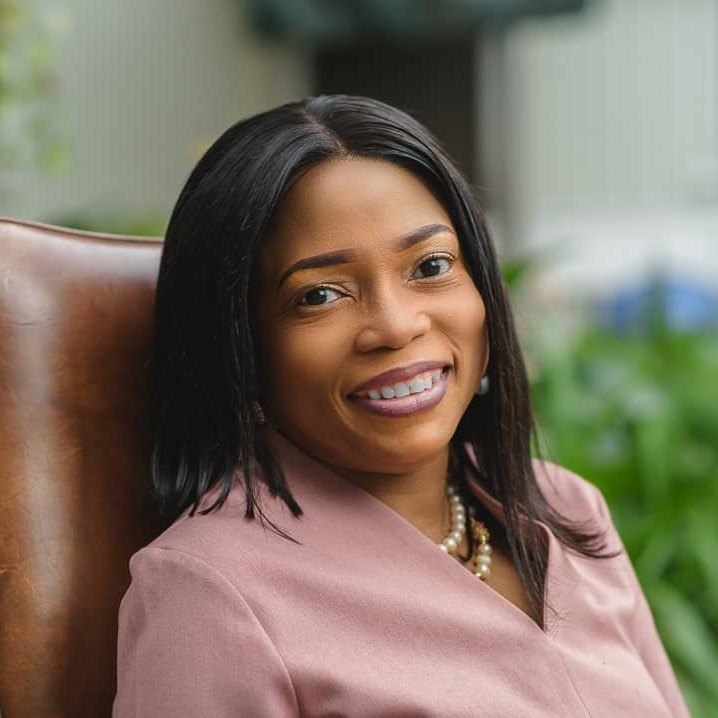

Some people pass through life, and there are people who pass through lives. Toyin Adesola was unquestionably the latter.
I have known remarkable people in my time. People of achievement, of vision, of tenacity. But Toyin occupied a category all her own — because everything she built, she built from a place of pain that would have silenced most of us. She did not have the luxury of dreaming from comfort. She dreamed from a hospital bed. She strategised between crises. She led whilst her own body waged war against her. And she did it all with a grace so quiet, so consistent, that you almost forgot the weight she carried every single day.
That was Toyin. A warrior who never made you feel the battle.
She was the daughter of Professor Akin Adesola — one of Nigeria’s most distinguished surgeons and Vice Chancellor of the University of Lagos — and she spent her formative years on that campus, in the shadow of a father whose hands healed thousands. There is a quiet irony in that, one I have never been able to fully shake: that one of Nigeria’s finest medical minds raised a daughter whom medicine could manage but never cure. What it could not cure, though, she refused to waste. She took the suffering her father’s profession understood better than most, and she turned it into a lifetime of service.
I knew Toyin personally, and I knew her well. During her vacations, she would come to our home — where she could rest, be herself, and yes, be a little spoilt, as she thoroughly deserved. Even then, you could see what she was made of. A young woman navigating a condition that imposed enormous limits on her life, yet never defined by those limits in any conversation, in any room, in any relationship.
And the limits were real. Toyin never married — not because she lacked love or warmth, for she had both in abundance, but because her condition made that path genuinely and unfairly inaccessible. She never had children of her own but was a mother to hundreds. She never flew on a plane — cabin pressure alone could trigger a crisis that would land her in hospital. She could not travel the world her intellect and curiosity deserved to explore. These are not small things. They are the quiet losses we must name honestly, because Toyin herself never complained about them. She simply redirected. Every door that closed became a window she climbed through to reach someone else.
She leaves behind her mother — now in her nineties, and may God sustain her through this grief no mother should bear — her only sister Foluke, an endlessly supportive brother in law, two nieces, a nephew, and a vast and devoted family of Adesola’s and cousins who loved her deeply. She also leaves behind thousands of warriors who called her their champion, their voice, their proof that life with sickle cell could be lived with dignity and even joy.
What Toyin built with SAMI — the Sickle Cell Advocacy and Management Initiative, which she founded in 2008 — is nothing short of extraordinary. What began as one woman serving one warrior grew into a movement touching over five thousand lives directly, and countless thousands more through awareness, education, and advocacy. Free monthly clinics. A dedicated helpline. Youth empowerment programmes. Community outreach. She constructed an entire ecosystem of hope, largely on the strength of her own resolve, her own story, and her own refusal to accept that suffering should go unanswered.
She wrote books — Still Standing ( The most popular now on Amazon), A Sickle Cell Warrior’s Intriguing Journey, How You Can Win Life’s Battles, Warrior Cells, The Resilience Code, Pain Management Planner — each one reaching into the darkest corners where young warriors sat frightened and alone, and pulling them toward light. She was not merely an author. She was evidence. Living, breathing, fighting evidence that sickle cell does not get the final word.
She went on radio, counselling and advising strangers on air, improving lives she would never see and never sought credit for. She painted — beautiful, soulful work — and sold her canvases to raise funds for SAMI, because even her art was in service of others. She designed clothes. She baked, running a small business that she threw herself into with characteristic intensity, often to the point of exhaustion — because rest, for Toyin, always came second to purpose.
And at every SAMI charity walk — every single one — Toyin was there. Not watching from the sidelines. Not supervising from a distance. She was there, in her wheelchair, rolling alongside the warriors she had gathered, leading from the front as she always did, in the only way she knew how: by showing up completely.
She was also a courageous advocate on one of Nigeria’s most sensitive conversations — the imperative of premarital genotype testing. She made the argument plainly and without apology: that the suffering of a child born into sickle cell disorder is not a burden parents alone carry; it is the child who bears the deepest weight. She urged couples to test before they committed, to know before they chose, because love without information is not enough when a child’s lifetime of pain hangs in the balance. She said this not from a place of judgment, but from sixty years of personal testimony. Nobody argued with Toyin on this. They couldn’t.
When Toyin came to fundraise for SAMI, and she fundraised tirelessly, nobody who heard her story walked away uncommitted. She had that gift. She would stand before you, or sit before you, and tell you simply and honestly what sickle cell meant, what SAMI did, and what was needed. And then, this is the part that undoes me completely — she would apologise for bothering you. She would actually apologise. As though she were the one asking a favour. As though we should not have been on our knees thanking her for letting us be part of something so important.
That was Toyin. Giving everything, asking for nothing, and sorry for the inconvenience of her own generosity.
Sixty years. Over a hundred hospital admissions and more in blood transfusions. Countless surgeries. And between each one, books, paintings, clinics, radio shows, charity walks, baked goods, designed garments, counselling sessions, advocacy campaigns, and an organisation that will outlast us all. If you or I accomplished half of what Toyin accomplished with an unencumbered body and an ordinary life, we would consider ourselves successful. She did all of it while fighting.
We will miss her. We will miss her warmth, her tenacity, her laughter, her quiet insistence on giving even when she had every reason not to. I will miss the woman who came to our home and allowed herself, briefly, to be cared for — before going straight back out to care for the world.
She called herself The Sickle cell Warrior – The Sickle Cell Soldier, and what a soldier!!.
She is still standing, and she always will.
To honour Toyin, please consider supporting SAMI — the organisation she gave her life to build.
There are many ways to continue her work:
Adopt A Warrior — sponsor a child or young person living with sickle cell, covering their health insurance, medications, and routine care. Become their backstop when crisis strikes.
Sponsor a Clinic Day — fund an entire session of free consultations, drugs, and tests for dozens of warriors who simply cannot afford them.
Donate Products — medications, supplements, medical consumables, and hygiene products that go directly to patients in need.
Support the Helpline — keep SAMI’s dedicated call centre running, providing counselling and guidance to families navigating this condition every day.
Fund Youth Empowerment — help a young warrior launch a business or access employment support, because sickle cell should not define their future.
Whatever you choose, you are not just giving to a charity. You are thanking Toyin for sixty years of unrelenting love. And may the generosity you show return to you multiplied.
Foluso Phillips
Chairman SAMI
SAMI (Sickle Cell Advocacy and Management Initiative)
22b Amosu Street off Bode Thomas Surulere
Lagos
Author